Does DCA reduce risk? What flow headlines mean for a regular buyer
The 30-second version
- DCA reduces timing risk, not the risk of the asset you buy.
- Flow headlines describe the past; using them to skip or double buys brings timing risk back.
- Use flow data as context and to manage platform risk, not as a buy or sell trigger.

On this page
One day the headlines report record ETF inflows; the next, heavy deposits to exchanges. If you buy a fixed amount every month, should any of that change the plan? Usually not, and the reason shows what dollar-cost averaging really protects you from.
What DCA actually reduces
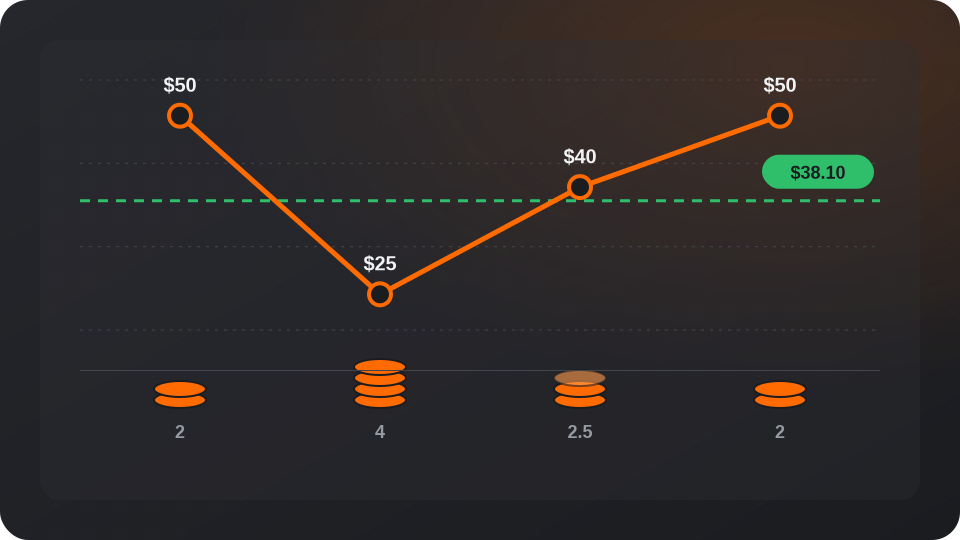
Dollar-cost averaging means buying a set amount on a set schedule. Because the amount is fixed, you get more units when the price is low and fewer when it is high. Hypothetically, $100 a month at $50, $25, $40 and $50 buys 10.5 units, an average cost of about $38.10.
That lowers timing risk: the chance of putting everything in just before a fall. It does not lower the risk of the asset itself. If the asset keeps falling, regular buying only spreads the loss over time, and in a market that mostly rises, investing earlier tends to come out ahead.
Why flow headlines tempt you to break the schedule
Flow data, such as ETF creations and redemptions, exchange inflows and outflows, and stablecoin supply, describes what large holders did recently. It is real information, but it looks backward and is often noisy: a strong day can be followed by a weak one, and exchange flows include internal moves between an exchange's own wallets.
Skipping a purchase after a day of outflows, or doubling it after record inflows, turns a rule into a forecast. That is exactly the timing decision DCA was meant to take off your hands.
Where flow data still helps a regular buyer
- Context, not triggers: read flows to understand why prices moved, after you have bought on schedule. Our guide to bitcoin ETF flows shows how to separate new money from price gains.
- Platform risk: buying regularly on one exchange builds up a balance there; moving it to your own wallet from time to time limits that exposure.
- Cash between buys: if you park cash as a stablecoin, know what backs it, because the stablecoin carries its own risks.
Rules worth writing down
- Pick an amount you can keep up through bad months.
- Decide in advance whether any data would change the schedule. For most people the honest answer is: none.
- Set a review date, such as once a year, to change the amount or stop, so changes are never made on a headline day.
Go deeper: how to read on-chain flows, from stablecoin mints to exchange netflow and ETF data →
Sources
For education only, not financial advice. Crypto assets are volatile and you can lose money.
Get one like this every morning
A 5-minute briefing in your inbox each weekday. Free, unsubscribe anytime.
On-chain moves as they happen: @pskdowk on Telegram