Hot vs Cold Wallets: What Exchange Wallet Moves Mean
The 30-second version
- Exchanges move coins between their own hot and cold wallets constantly; those transfers are not buying or selling.
- Read flow data as net flow over time, check address labels, and expect providers to disagree.
- For your own coins, keep a small hot balance and long-term holdings in cold storage, with the recovery phrase offline.

On this page
A hot wallet keeps its keys online for quick use; a cold wallet keeps them offline for safety. Exchanges move coins between their own hot and cold wallets all the time, and those transfers show up in flow data without anyone buying or selling. Check labels and net flow before reading a big transfer as a signal.
What is the difference between hot and cold wallets?
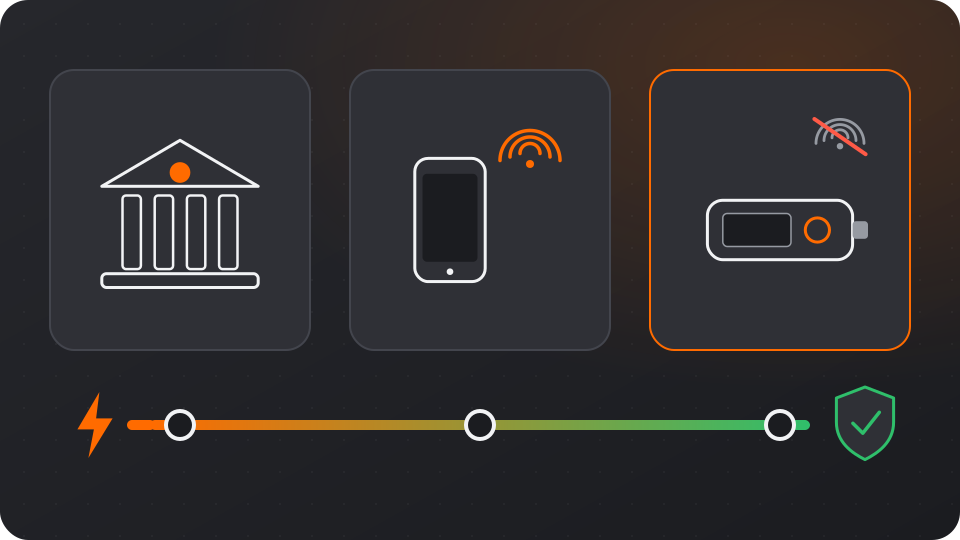
A hot wallet keeps its keys on an internet-connected system, so it can sign transactions quickly. A cold wallet keeps its keys offline and signs slowly, often only after several approvals. Individuals use the same split: an app for daily use, a hardware device for savings.
How do exchanges use hot and cold wallets?
Exchanges keep a working balance in hot wallets to pay out withdrawals and hold most reserves in cold storage. When withdrawals drain the hot wallet, they refill it from cold storage; when deposits pile up, they sweep the surplus back. These transfers can be large, and they happen whatever the market is doing.
Every one of those moves is visible on-chain, yet none of them is a customer buying or selling. Our guide to reading on-chain flows shows how exchange netflow is calculated, and companies that hold bitcoin on their balance sheet face the same custody choices; see bitcoin treasury companies.
How do you read flow data without the noise?
- Check the labels. Flow trackers tag addresses as belonging to an exchange; a transfer between two wallets of the same exchange is internal.
- Watch net flow, not single transfers. One big move between an exchange's own wallets can look dramatic on a whale-alert feed.
- Treat labels as estimates. Data providers tag different sets of addresses, so their exchange balance figures rarely match exactly.
- Look for persistence. A trend in net flows over days or weeks says more than any one transfer.
What does it mean for your own coins?
Coins left on an exchange sit inside that pooled hot-and-cold system, and you rely on the company to run it well. When FTX collapsed in 2022, many customers could not withdraw. Holding your own keys moves that responsibility to you.
A simple split works for most people: a small hot balance for apps and transfers, and a cold wallet for long-term holdings, with the recovery phrase kept offline.
Sources
- Investor.gov (U.S. SEC) — Crypto Asset Custody Basics for Retail Investors · December 12, 2025
- U.S. SEC — SEC Charges Samuel Bankman-Fried with Defrauding Investors in FTX · December 13, 2022
For education only, not financial advice. Crypto assets are volatile and you can lose money.
Get one like this every morning
A 5-minute briefing in your inbox each weekday. Free, unsubscribe anytime.
On-chain moves as they happen: @pskdowk on Telegram