What on-chain data is and why small investors should care
On this page
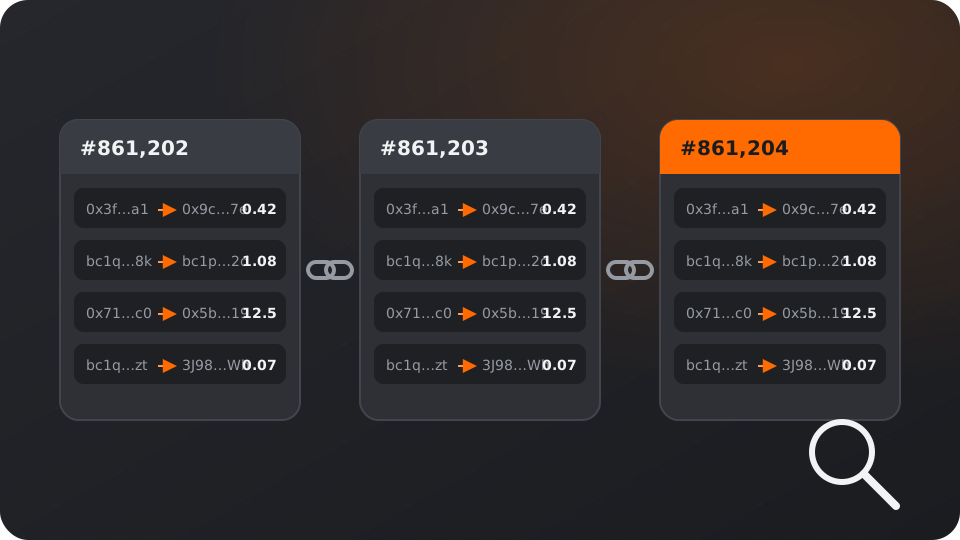
Every transaction on a public blockchain like Bitcoin or Ethereum is recorded in a ledger that anyone can read. That record is what people mean by on-chain data — and you do not need to be an analyst to get something useful out of it.
What exactly is on the chain
A public blockchain stores each transfer: which address sent coins, which address received them, how much, when, and what fee was paid. Nobody has to publish this information — it is part of how the network works, so it cannot be quietly edited after the fact.
Block explorers such as mempool.space for Bitcoin or Etherscan for Ethereum let you look up any address or transaction for free. Analytics services go further and group addresses, label known exchanges and turn the raw records into charts.
A few metrics worth knowing
- Active addresses — how many addresses sent or received coins in a day. A rough gauge of how much the network is being used.
- Transaction fees — when many people want to transact at once, fees rise. Fee spikes often line up with moments of excitement or panic.
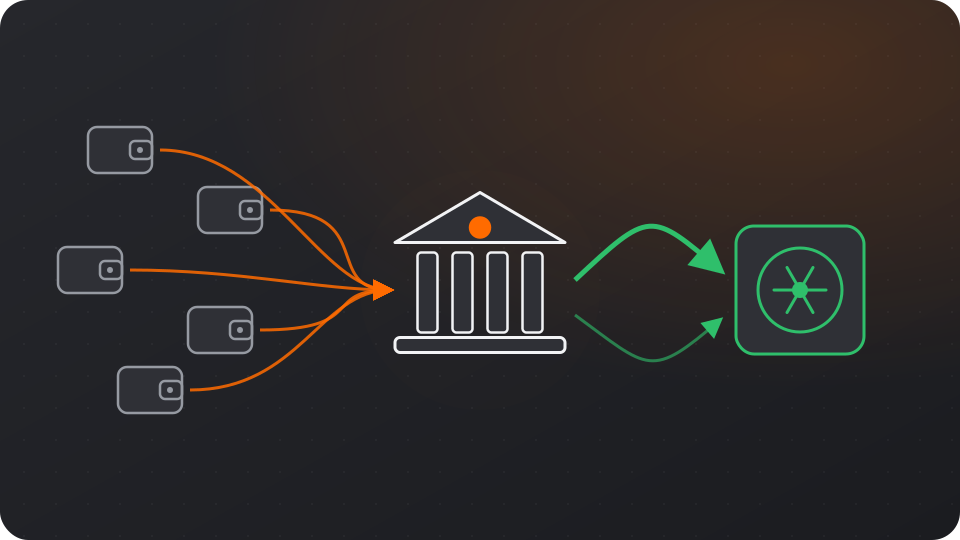
- Exchange inflows and outflows — coins moving onto exchanges are often (not always) on their way to being sold; coins moving off exchanges are often going into longer-term storage.
- Stablecoin supply — a growing supply of dollar-pegged tokens suggests more cash is sitting on-chain, ready to be used.
- Large holders — movements from very large wallets get attention because they can move the market, or signal what big players are doing.
Why it matters for a small investor
Social media is full of claims that "whales are buying" or "everyone is leaving". On-chain data lets you check some of those claims against what actually happened, instead of taking a stranger's word for it.
It also helps you notice context. A sharp price drop with little exchange activity reads differently from a drop accompanied by heavy inflows to exchanges.
The limits
On-chain data is a record of movements, not of intentions. Keep these caveats in mind:
- One person can control many addresses, and one address (an exchange) can hold coins for millions of people.
- Exchanges move coins between their own wallets all the time, which can look like big flows when nothing has really changed.
- Labels come from analytics providers and can be wrong or incomplete; two providers may show different numbers for the same metric.
- Much trading happens inside exchanges and never touches the chain at all.
For education only, not financial advice. Crypto assets are volatile and you can lose money.
Get one like this every morning
A 5-minute briefing in your inbox each weekday. Free, unsubscribe anytime.
Or follow the Telegram channel @pskdowkMarket now
Latest news